Problem
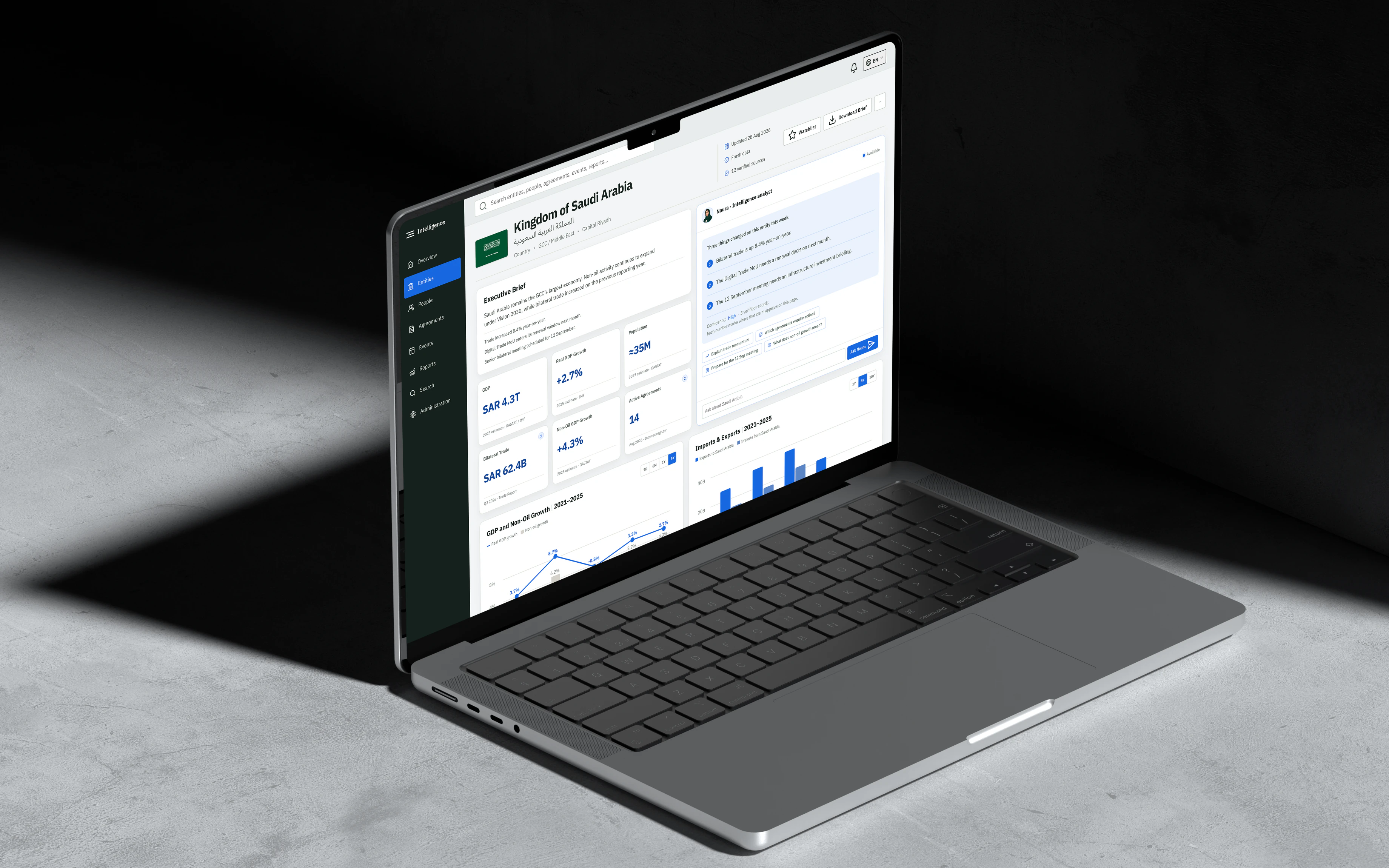
An analyst has a leadership meeting about Saudi Arabia in an hour. The facts they need are spread across trade reports, agreements, events, and people. They need one trusted brief, fast, and the evidence behind it when someone asks "says who?"
The user: a public-sector analyst. The job: prepare a trusted entity brief in minutes, then move into evidence when needed.
The risk is not a slow dashboard. It is an AI summary that sounds confident and can't be checked.
How I fixed it
Structure before style
I wireframed the reading order before any colour: identity, then the brief and assistant, then charts, then records. Every screen decision follows that order.
Why this, not that
Chose
Facts before AI
NotAn AI summary at the top
Six KPIs, each with its source and date, load before any interpretation. An analyst has to trust the numbers before they trust a summary of them.
Chose
An assistant with a name and a seat
NotA floating chat bubble
Noura sits beside the Executive Brief, so interpretation is there during the first scan. A name, portrait and "Available" state make her read as a colleague, not a feature.
Chose
Numbered claims that point at the page
NotA paragraph of AI text
Noura's brief is three numbered claims. Each number reappears on the card it came from, so every claim can be checked in one glance.
Chose
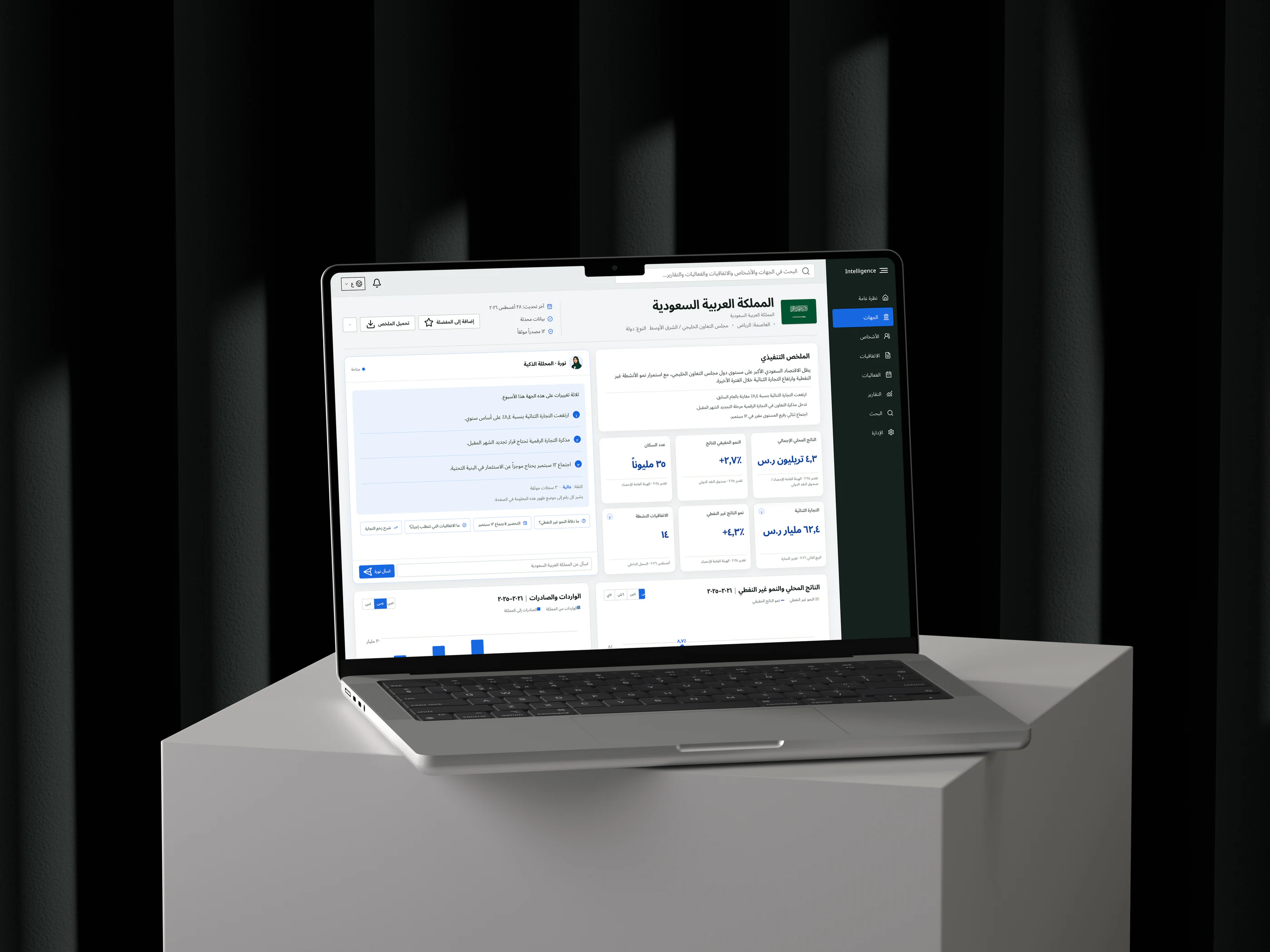
Arabic recomposed, not mirrored
NotThe English layout, flipped
RTL changes content order, table alignment, chart labels, metadata flow and line length. The Arabic build is composed for Arabic readers.
Chose
Institutional blue
NotThe national flag green
Blue carries actions, focus and charts. It stays professional and keeps the product separate from a national symbol.
Solution
Only three charts made it in, because each answers one analyst question: is the economy growing, is our trade growing, and where is our exposure?
An assistant that is honest about evidence
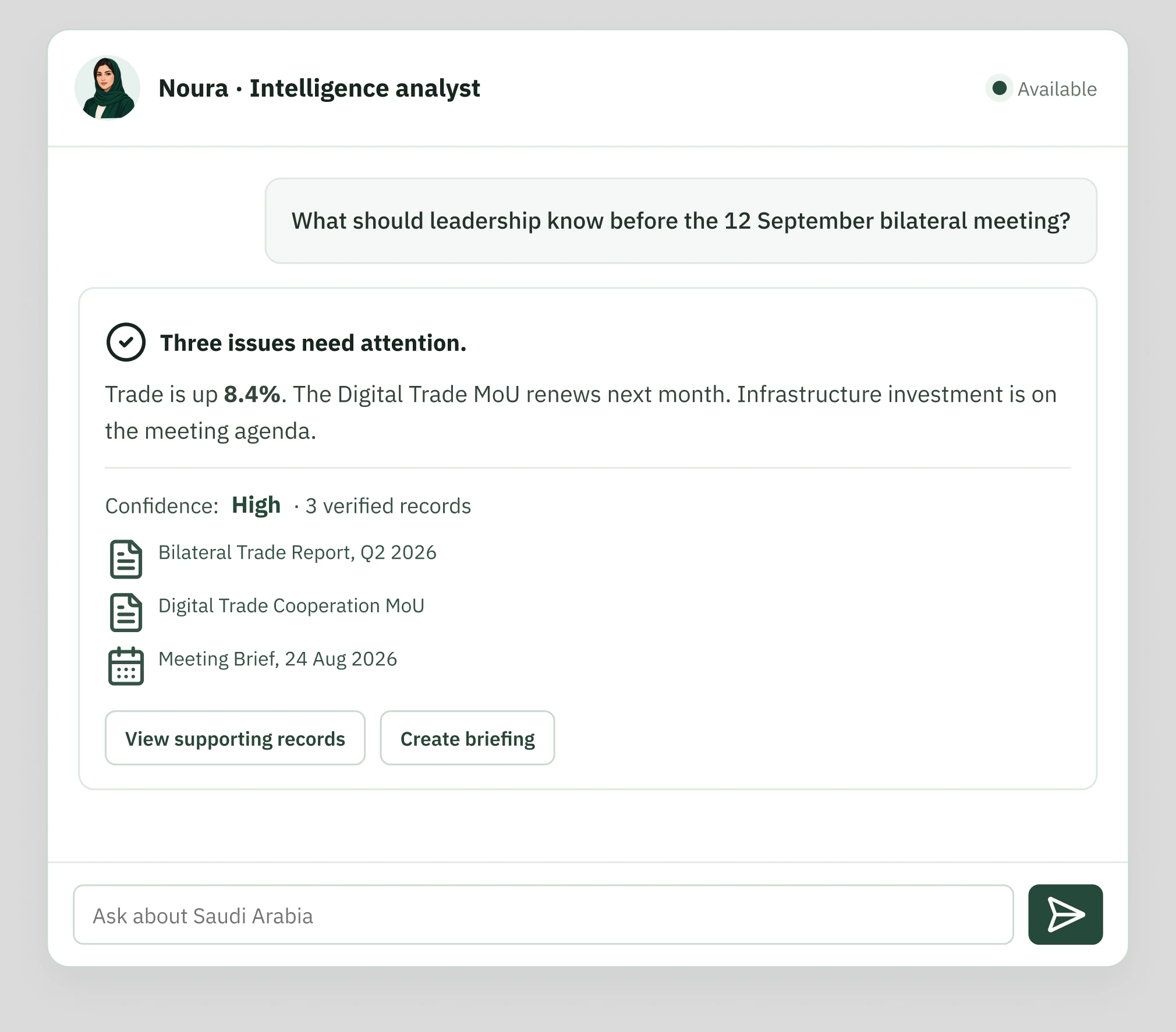
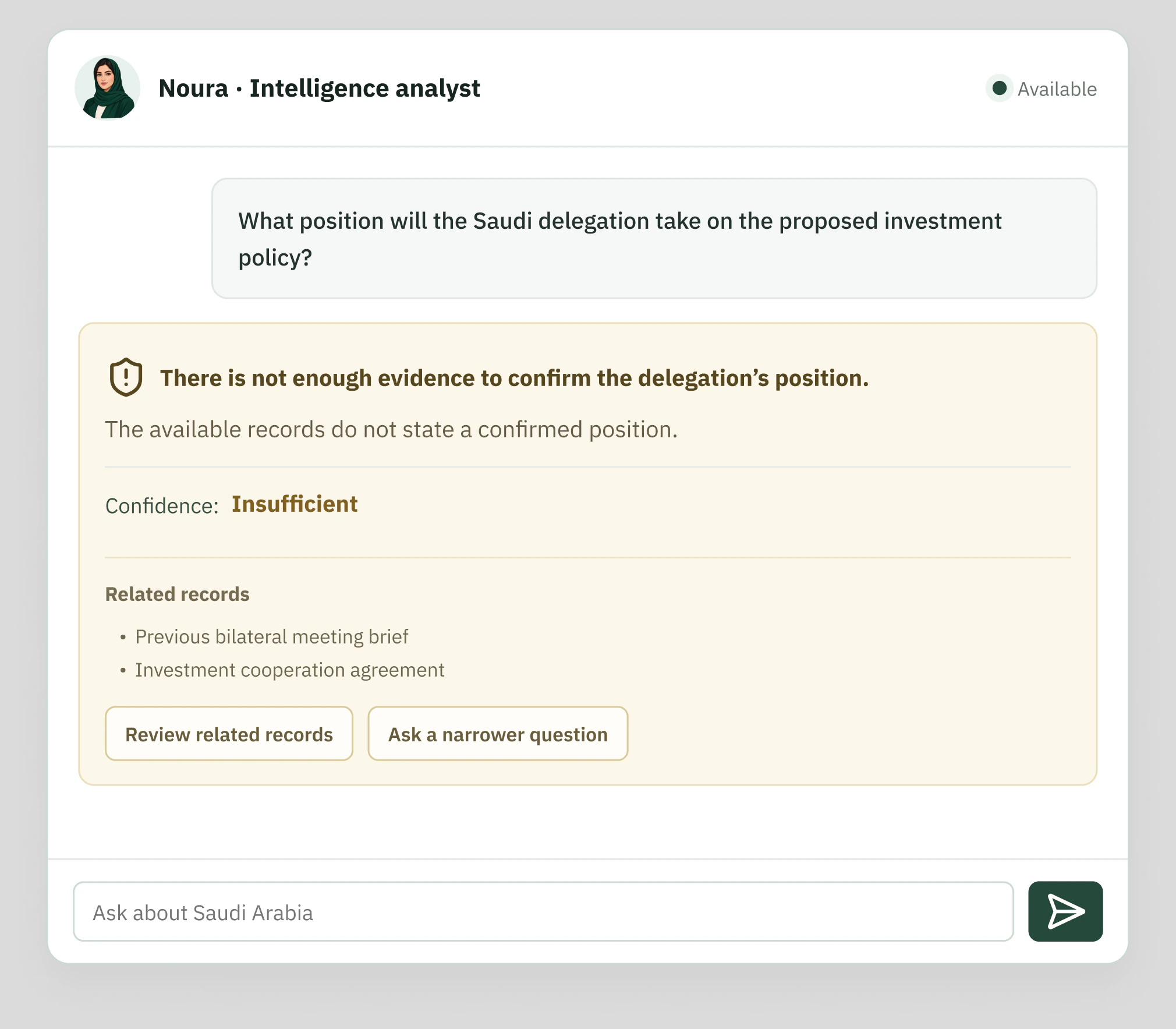
The hardest design problem was the moment the AI doesn't know. I designed two states. In the first, every claim is backed by a verified record and the sources are listed. In the second, Noura says there isn't enough evidence and offers a next step instead of a guess.
Supported
Evidence gap
Built for Arabic
Results
This is a concept built on fictional government data, so the outcomes are design outcomes, not measured metrics.
Before building further, the first question I'd put to a real analyst: which source must you verify before you trust a leadership briefing? The answer decides what Noura cites first.