Skip to content
Abdulghafor Abbas.

Enterprise / Shown with sample data

ATLP Design System.

A design system that only existed as an Adobe XD document. I rebuilt it as tokens and components that people and AI can both read, then rebuilt 94 screens on top.

One source of truth, readable by designers, developers and AI.

ATLP semantic colour tokens
ATLP component patterns built from the tokens
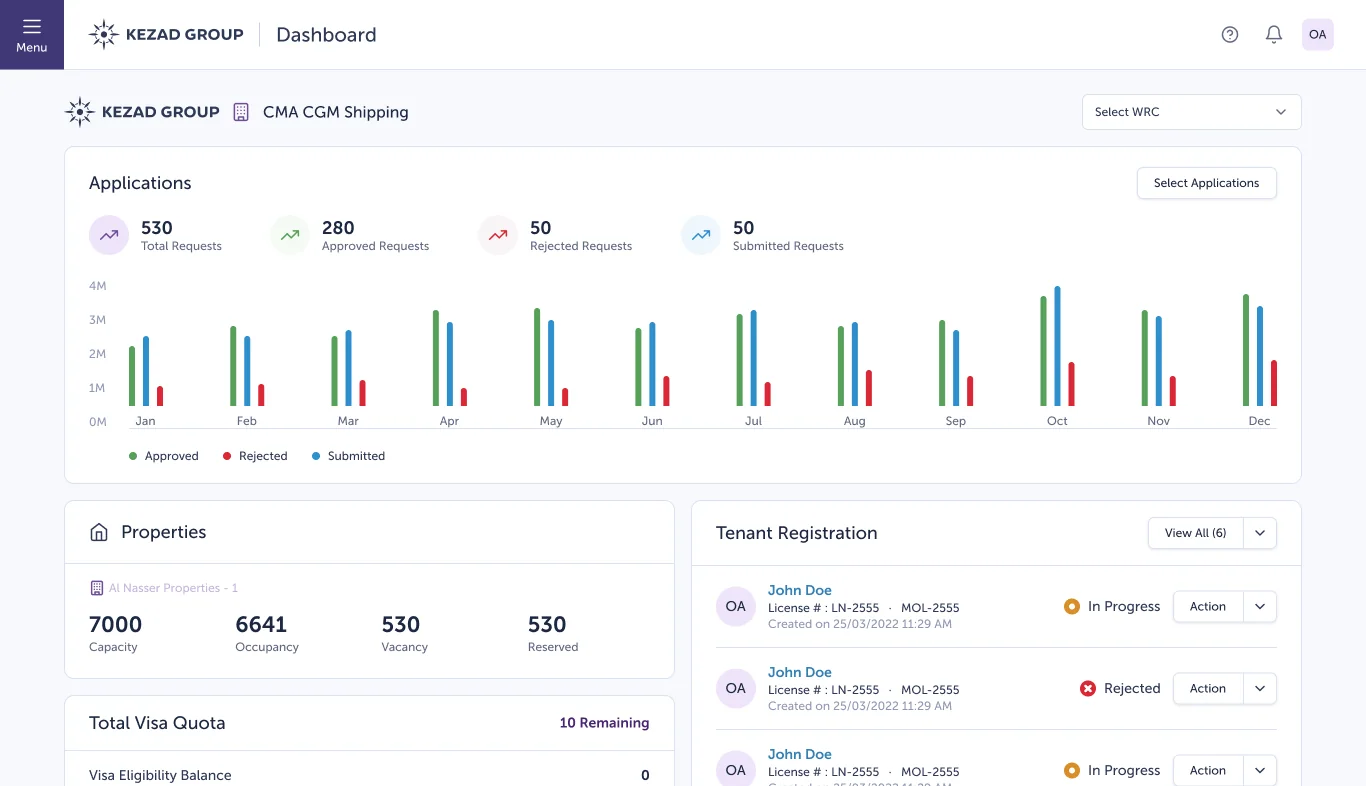
The rebuilt ADNIC dashboard, assembled from the components
  1. 94

    screens rebuilt from the components

  2. 62

    component sets built on the tokens

  3. 300

    tokens, each with its CSS variable

Client
AD Ports Group · KEZAD Group
Year
2026
Role
Senior UI/UX Expert, design system lead
Tools
Figma, Figma variables, Figma MCP, Claude Code

Problem

ATLP is the trade and logistics platform behind KEZAD and AD Ports services: KYC, insurance, permits, inspections, milestones. Its design system lived in Adobe XD as a document. There were pages of specs, but no components, no tokens and no styles.

So every screen was drawn by hand, and every team drifted. The same card existed in a dozen slightly different versions, and nothing told a developer which one was right.
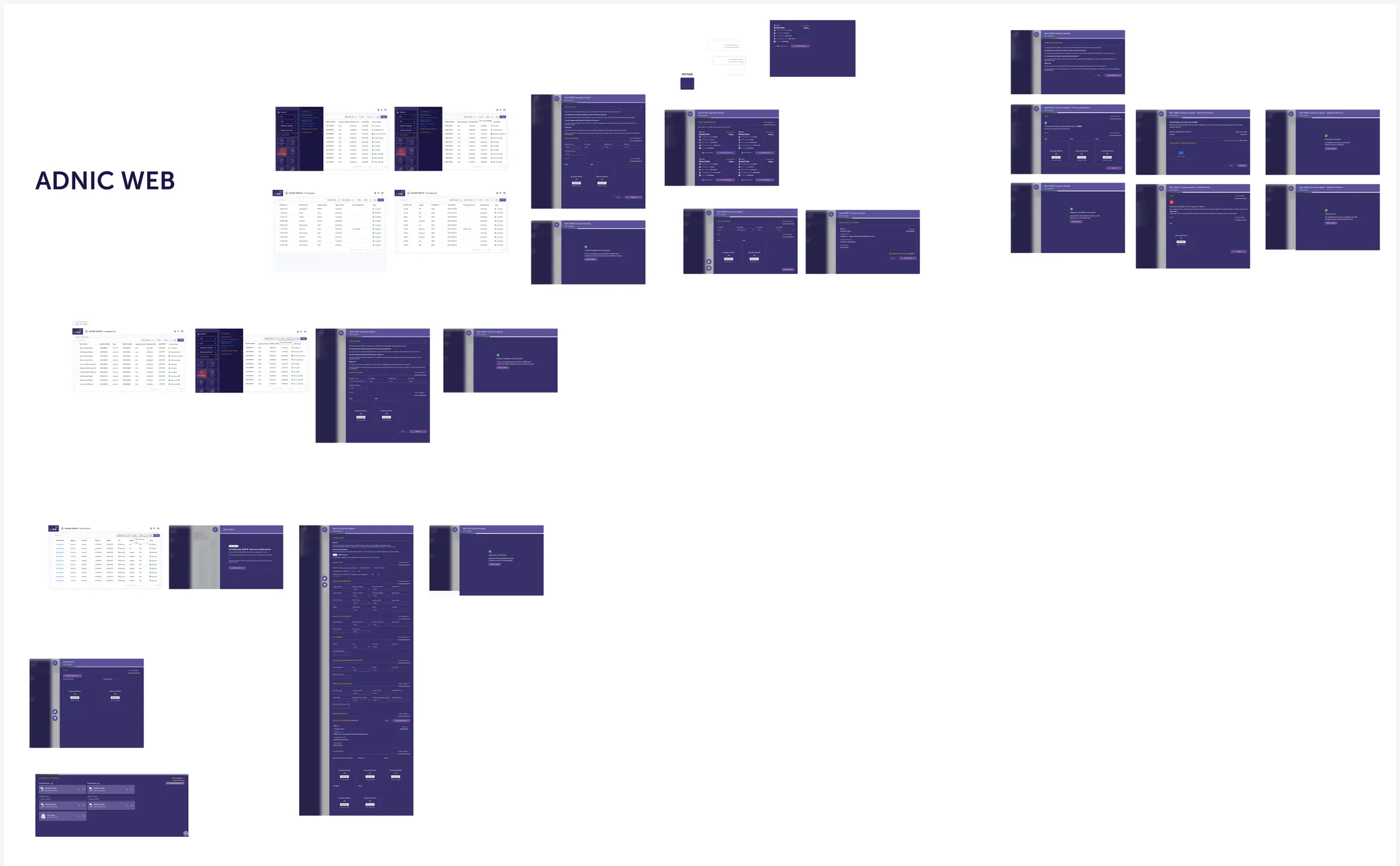
Original ADNIC Web screens scattered across the canvas
Before: ADNIC alone was 49 loose frames with no shared parts.

How I fixed it

  1. Audit
  2. Approve in HTML
  3. Tokens
  4. Components
  5. Rebuild 94 screens
  6. AI handoff
The redesign was approved as a working HTML build first, then rebuilt natively in Figma from that source of truth.

Tokens that AI can read

Every colour, space and type value is now a variable with a semantic name, like background/surface or action/primary, and each one carries the matching CSS variable. Designers, developers and AI tools such as Claude through the Figma MCP all read the same names, so generated screens and code stay on the system.
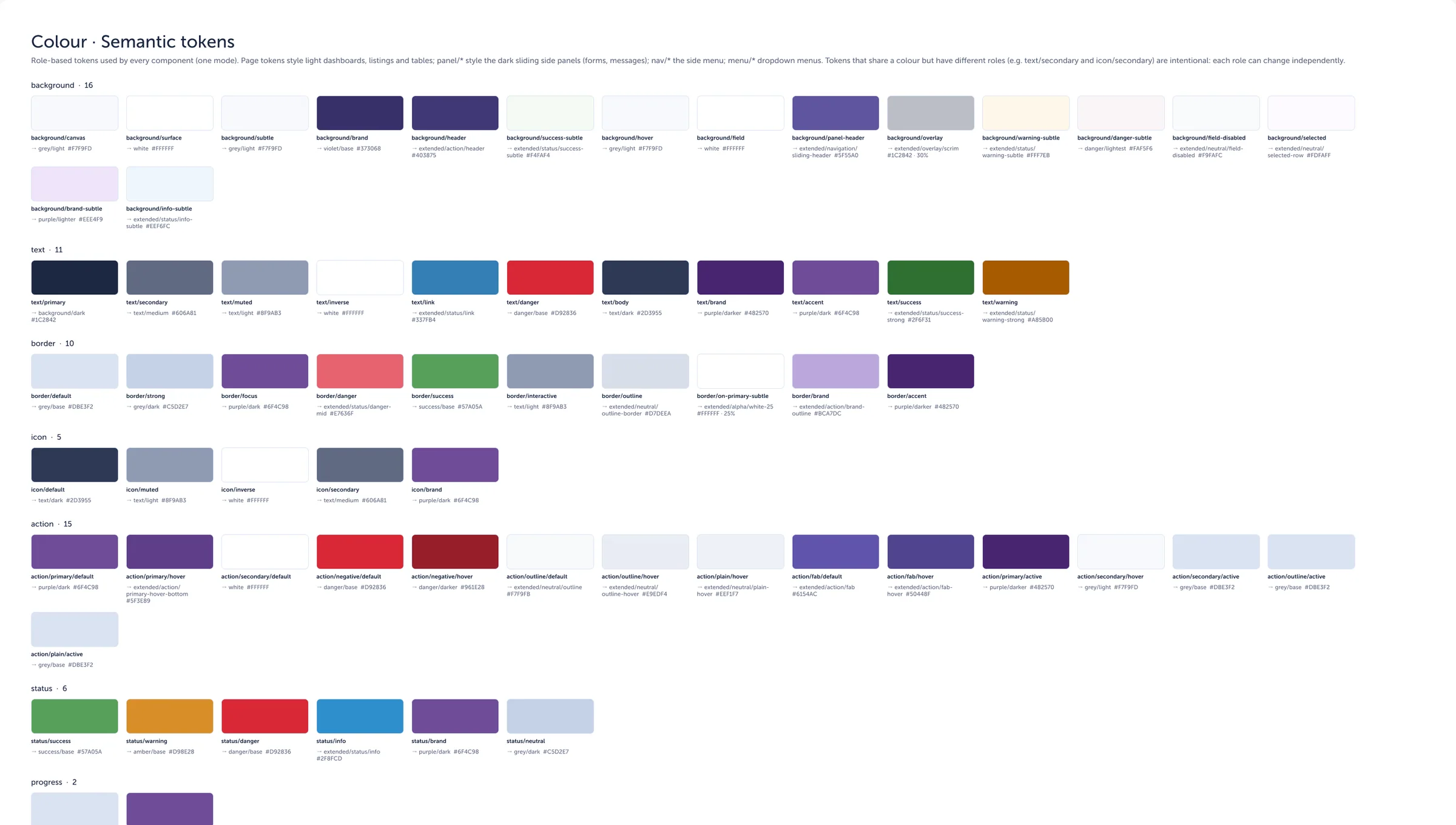
ATLP semantic colour tokens: background, text, border, icon, action, status and panel
107 semantic tokens on top of 106 primitives. Each one is scoped, so it only appears where it belongs.

Why this, not that

Chose

Semantic tokens

NotRaw hex in every frame

Change the brand once and every screen follows. 300 variables in 4 collections: primitives, semantic, dimensions and typography.

Chose

Rebuild from components

NotRestyle the old frames

Restyling hides the drift. Rebuilding forces every screen through the library. The originals stay locked in an archive for reference.

Chose

Light pages, dark side panels

NotFull light and dark themes

Forms and approvals open as dark panels over the page, so focus is obvious, and the token set stays half the size.
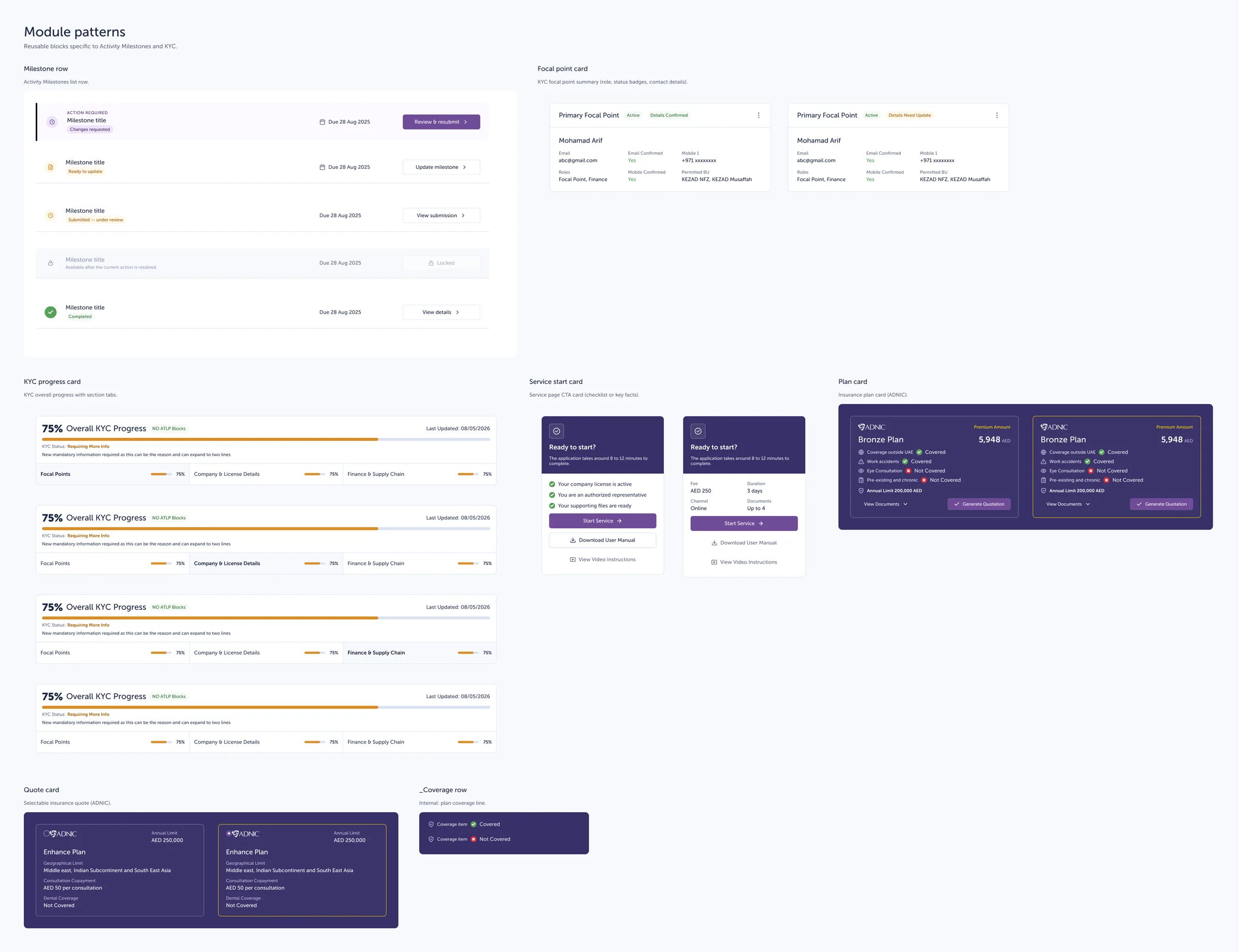
ATLP module patterns: milestone rows, focal point cards, KYC progress, service start and insurance plan cards
62 component sets, 29 components and 97 icons and logos, including patterns specific to each service.

Solution

Six services now share one system: Activity Milestones, DLS, KYC, ePass, ADNIC Web and DLS & Establishment.
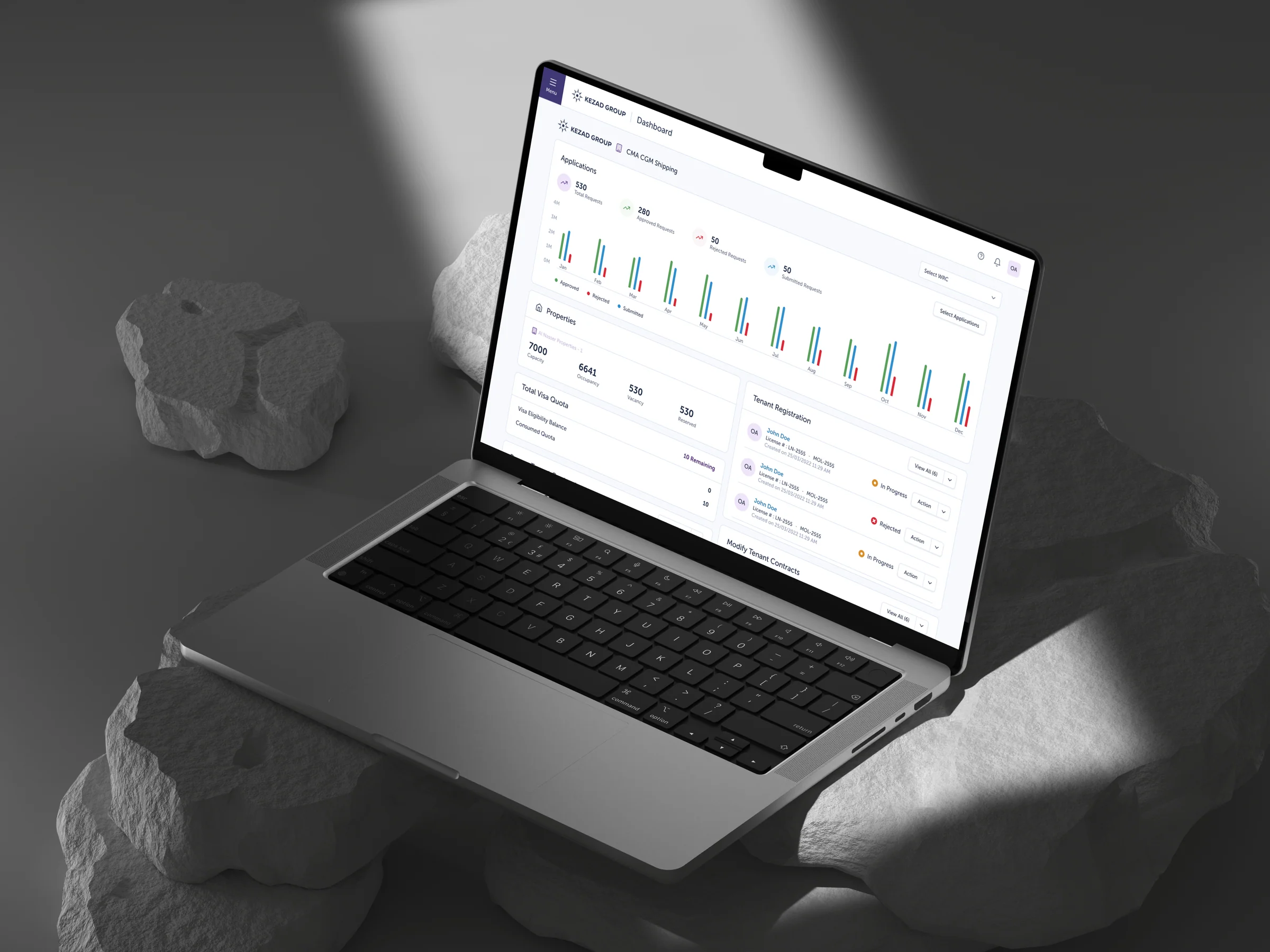
Rebuilt ADNIC dashboard on a MacBook resting on stones
The ADNIC dashboard, rebuilt entirely from library components.

Before

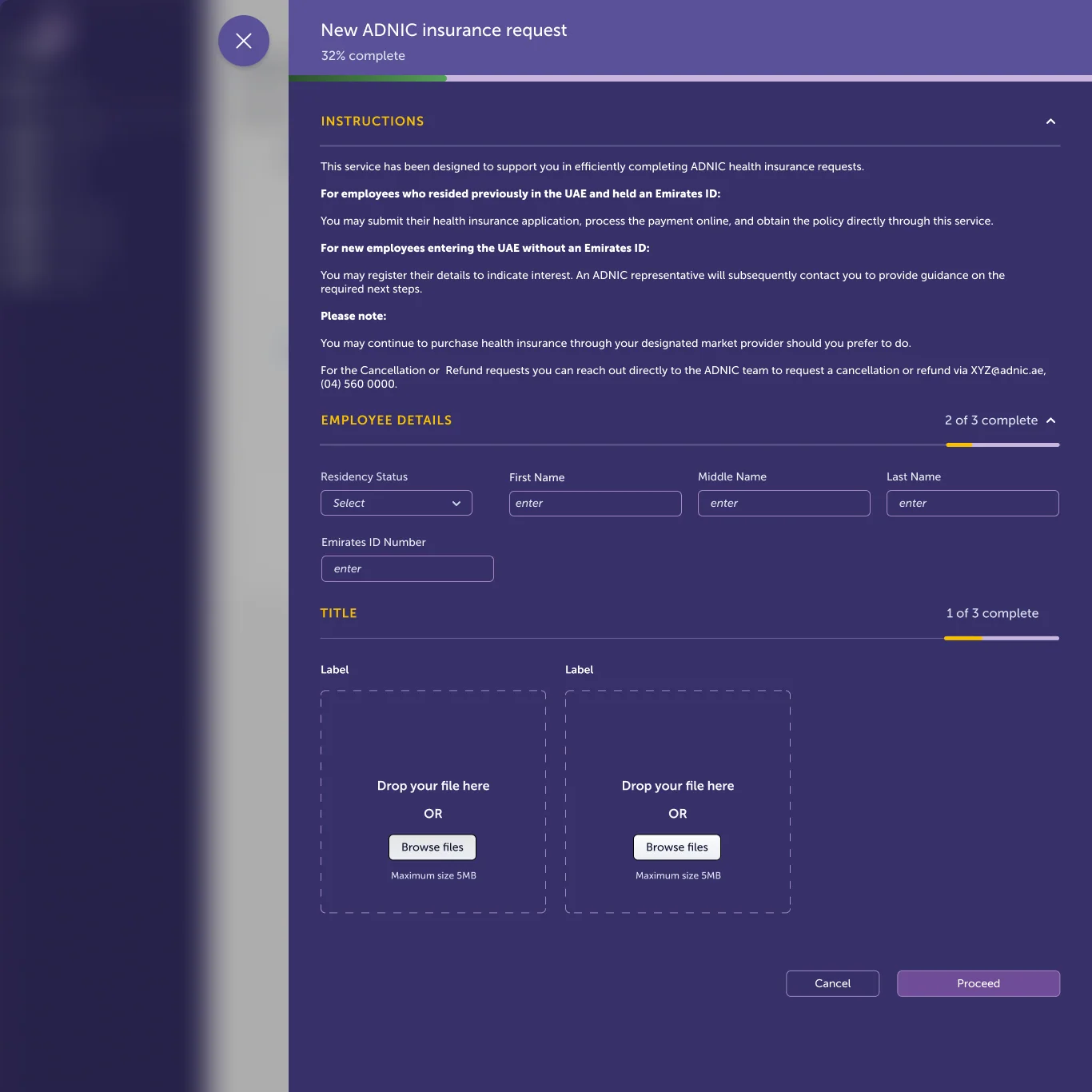
Original ADNIC insurance request panel
Uneven spacing, mixed progress styles.

After

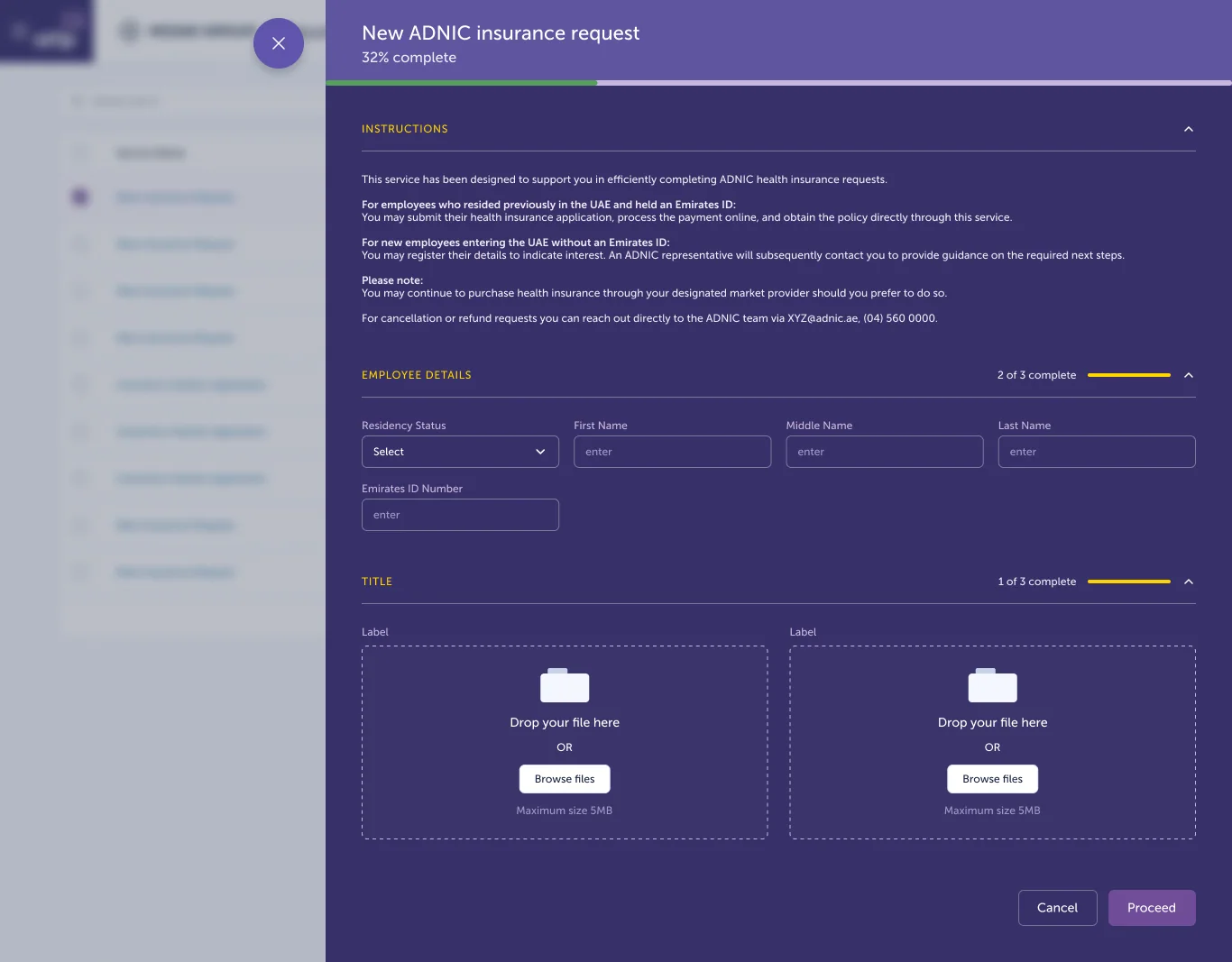
Rebuilt ADNIC insurance request panel
Same flow, built from the panel, form and upload components.
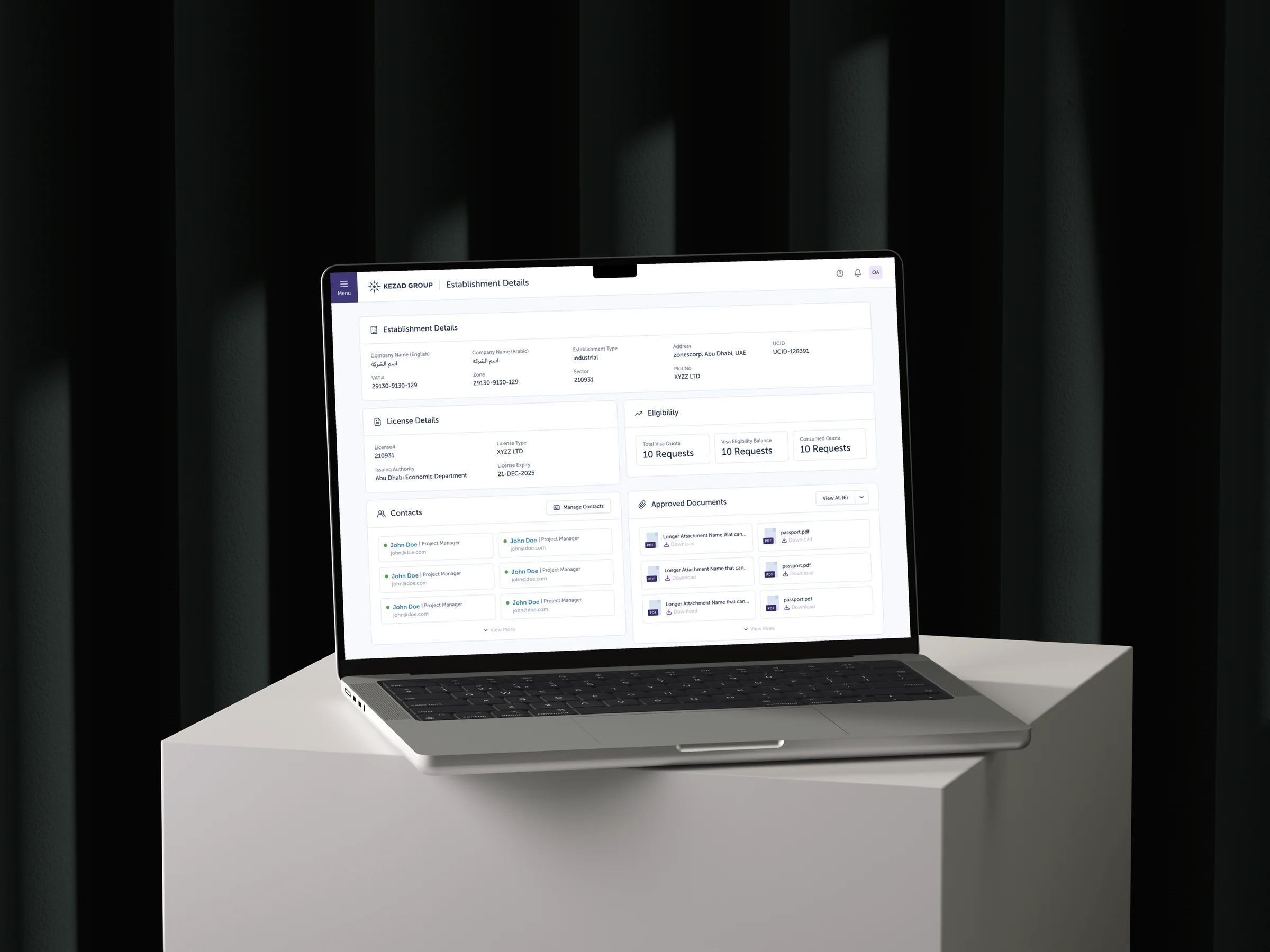
Establishment details page on a MacBook on a white plinth
Establishment details: licence, eligibility, contacts and documents, all from shared cards.
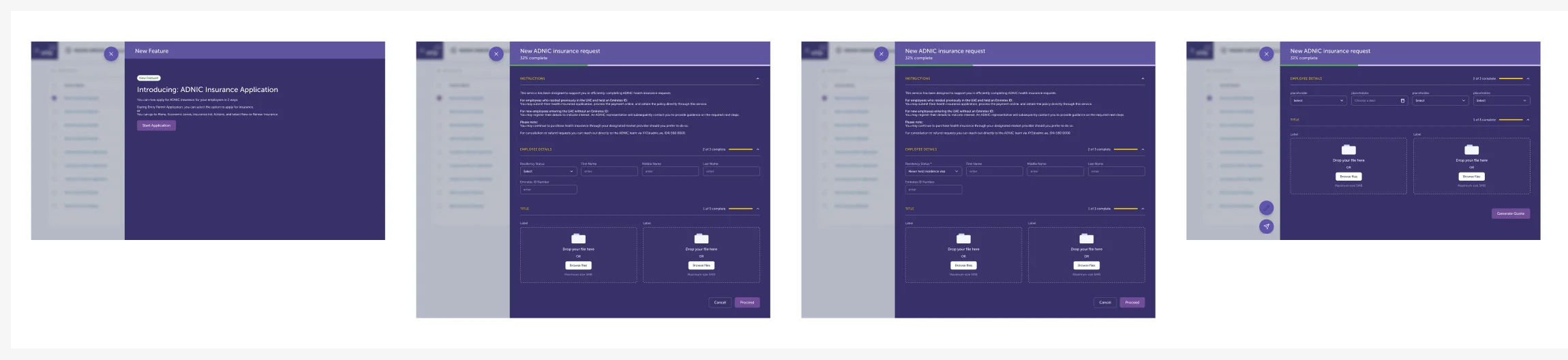
The ADNIC insurance request flow from ADN-07 to ADN-13, laid out in order
Every screen has a code and a place in a named flow. This is the start of the insurance request, ADN-07 onwards.
  • 94

    screens rebuilt across 6 services

  • 300

    tokens, each with its CSS variable

  • 62

    component sets in 8 categories

Counts from the final Figma file, October 2026

Results

"He has a rare ability to turn complex requirements into clean, intuitive designs that truly serve both users and business goals."

Saleem Sinokrot, Product Manager, AD Ports Group

  • One source of truth. Design, code and documentation use the same token names.
  • AI-ready. Claude and other tools can read the file and build new screens that stay on the system.
  • Faster new work. A new service starts from the library, not a blank frame.
Want results like these?

Tell me what you're working on. A 30-minute call is usually enough to know if I can help.

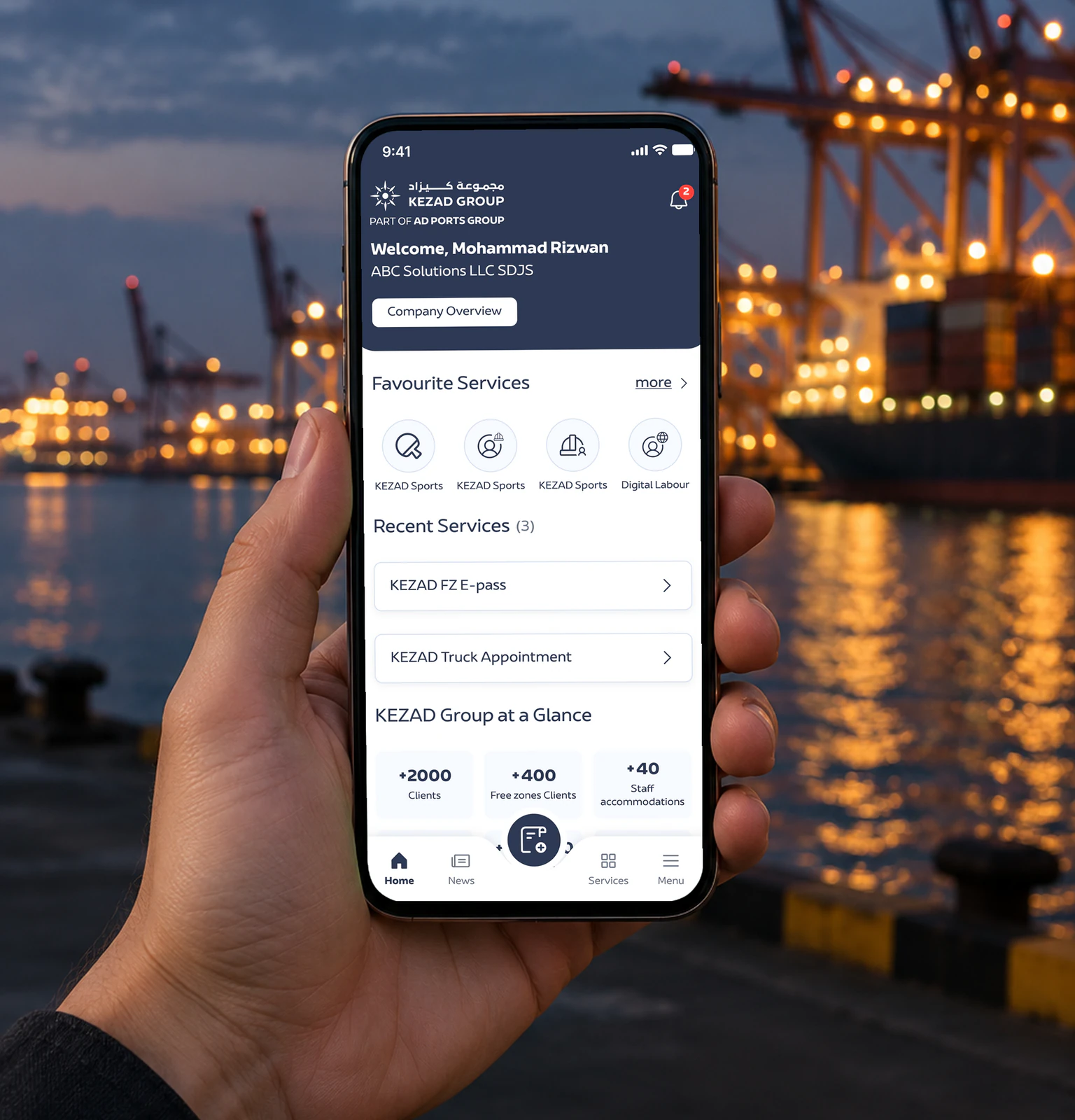
  1. The KEZAD app home screen on a phone held in front of a port at dusk
    01

    Enterprise 2026

    KEZAD Mobile App

    One app, four kinds of user. I gave guests, company users, limited-access users and multi-company owners their own flows, all on one system.

  2. The Cashi wallet home screen on a phone held in violet light
    02

    Fintech / UI experiment 2025

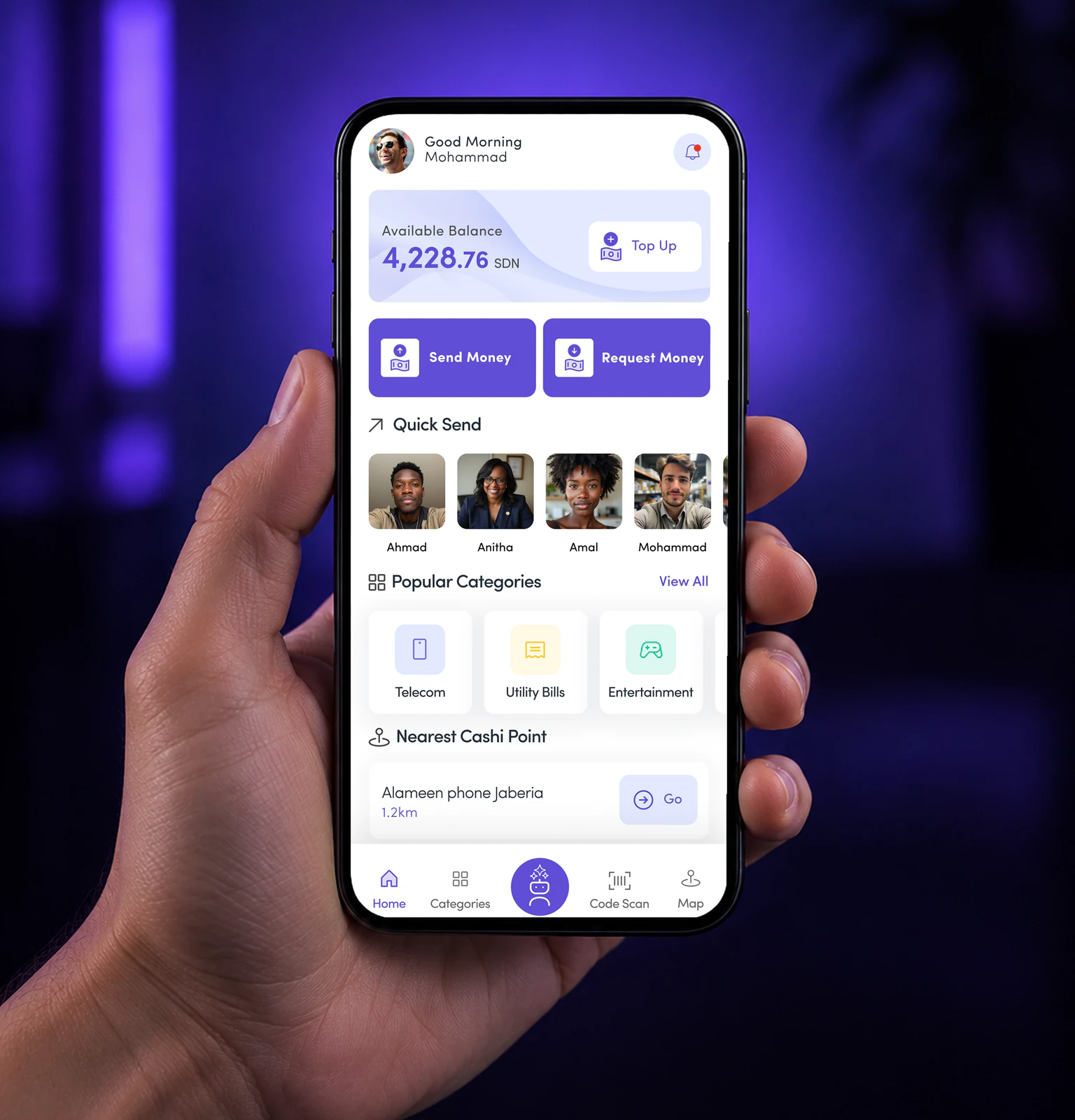
    Cashi

    A digital wallet for young Sudanese users with limited data, varied literacy, and no patience for scrolling.

  3. The Launchsoft landing page on a laptop in a dark concrete room
    03

    SaaS 2026

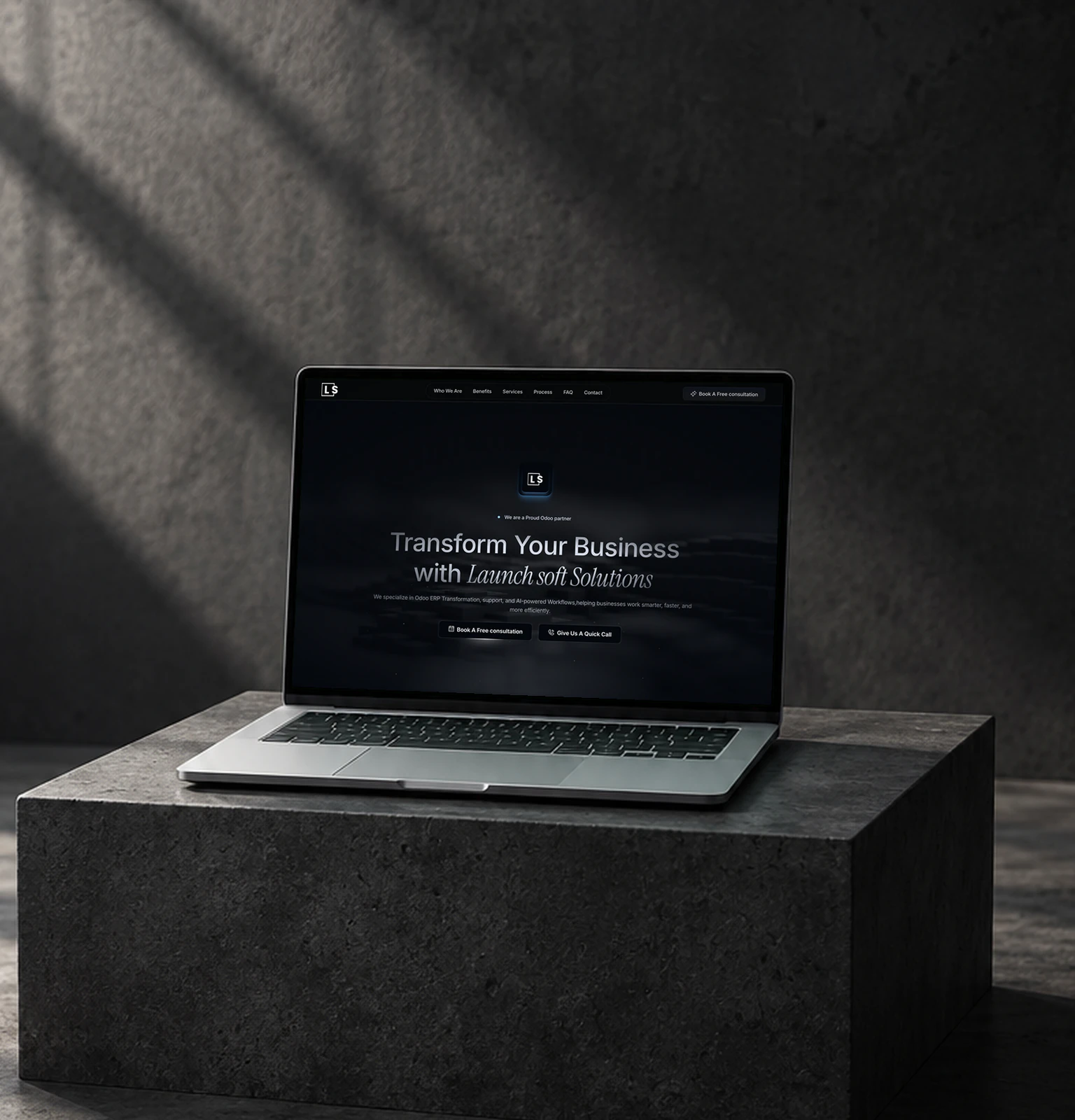
    Launchsoft

    An Odoo ERP partner whose site buried its own offer. I rebuilt it around one clear path to a booked call.